History · Necropolis of Pantalica
History and culture of Pantalica
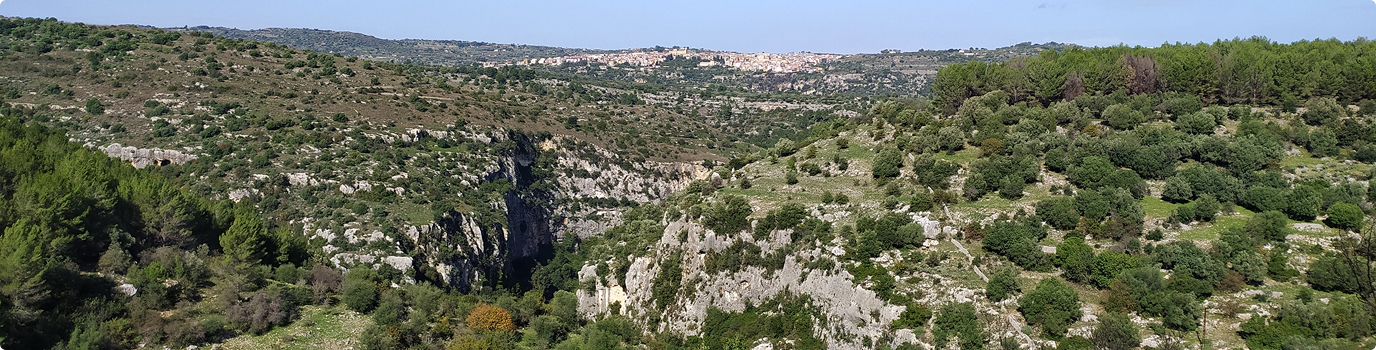
One of the oldest and most striking rock-cut necropolises in Europe, dating back to the Bronze and Iron Ages, located in Sicily between the towns of Sortino and Ferla, in the province of Syracuse.
- Chamber tombs
- over 5,000
- UNESCO World Heritage
- since 2005
- Phases of the Sicel civilisation
- 4
- End of the settlement
- 9th c. AD
The site is known for its more than 5,000 chamber tombs carved into the rock, overlooking the deep canyon of the Anapo Valley. For its outstanding historical, archaeological and natural value, Pantalica has been on the UNESCO World Heritage List since 2005.
Besides its priceless archaeological importance, Pantalica offers a natural setting of rare beauty: rocky gorges, crystal-clear streams and extraordinary biodiversity make it an ideal destination for hikers, history enthusiasts and nature lovers.
Timeline
The four phases
The origins of the Necropolis of Pantalica go back to a time before the Greek colonisation, when south-eastern Sicily was inhabited by several peoples, as the many archaeological remains show. The studies of archaeologists such as Paolo Orsi and Luigi Bernabò Brea have made it possible to reconstruct the history of Pantalica, dividing it into four main cultural phases:
Phase I · Late Bronze Age
13th – 11th century BC
In this first and most flourishing period, Pantalica reached its cultural and political peak. The North and North-West Necropolises belong to this first cultural phase, a time of important change: people moved from the coast to the interior, choosing more sheltered and easily defended areas, such as the rocky heights of Pantalica.
What to see along the trails
6th – 9th century AD
Byzantine Pantalica
The last phase of the history and culture of Pantalica is the Byzantine one, a period of strong social tension caused by constant religious conflict and heavy taxation. Probably for these reasons, rather than gathering in the cities, where tension was highest, people preferred to scatter into small villages. Part of the population therefore gradually moved to the great plateau of Pantalica which, thanks to its strategic position, was used by the Byzantines as a refuge from Arab raids.
According to the studies of Paolo Orsi, the population moved to Pantalica between the 6th–7th and the 8th century AD. Orsi dates the Byzantine settlement at Pantalica to this very period; it came to an end towards the late 9th century AD with the Arab settlement.


Living Pantalica use case
Developed as part of the Data-Highway project 'Creation of a "Linked Open Data" platform for innovative applications for tourism and cultural promotion' , funded by the Complementary Operational Programme (POC Sicilia) 2014-2020 – Axis 1 'Supporting competitiveness and sustainable, innovative digital transformation', Action 1.1.1 'Qualified investments for the development and strengthening of research and innovation capacity' - Completion of the ranking of Action 1.1.5 of the PO FESR Sicilia 2014/2020.
datahighway.it